Wall Tile History: From Ancient Egypt to Modern Interiors
Tiles have been integral to architectural and artistic expressions for millennia, encapsulating diverse histories, techniques, and aesthetics.

Ancient Egypt, as early as 4000 BCE, saw tiles prominently featured in palatial and sacred architecture. With their rich, lustrous blue reminiscent of the Nile, faience tiles became a hallmark of Egyptian craftsmanship. Meanwhile, the Indus Valley civilization, renowned for its urban planning, incorporated baked brick tiles, demonstrating their advanced construction techniques.

Classical antiquity brought a renaissance in tiling. The Greeks, with their penchant for artistry, used tiles decoratively. However, it was the Romans who truly popularized them. From their public baths to grand villas, ornate mosaic tiles narrated stories of deities, heroes, and everyday Roman life, becoming testaments to their architectural prowess and cultural grandeur.

Islamic art, constrained by religious edicts against representing living forms, found a unique voice through tiles. Complex geometric patterns and arabesque designs became the centerpiece of Islamic architecture. The interiors of their mosques, palaces, and homes showcased exquisite geometric and arabesque tile designs, transforming walls into a visual symphony of patterns and colors. Monuments like Spain's Alhambra or Istanbul's Topkapi Palace bear witness to this unparalleled tile artistry.

The advent of the 20th century saw Europe's Art Nouveau movement harness tiles to depict nature-inspired motifs characterized by fluid lines. Tiles began adorning the interiors of grand halls, palaces, and ordinary households. They became markers of style and luxury, with houses often boasting ornately tiled fireplaces, hallways, and dining areas. Concurrently, the Arts and Crafts movement in the Americas championed handcrafted tiles, underpinning the value of artisanal work in an industrial age.

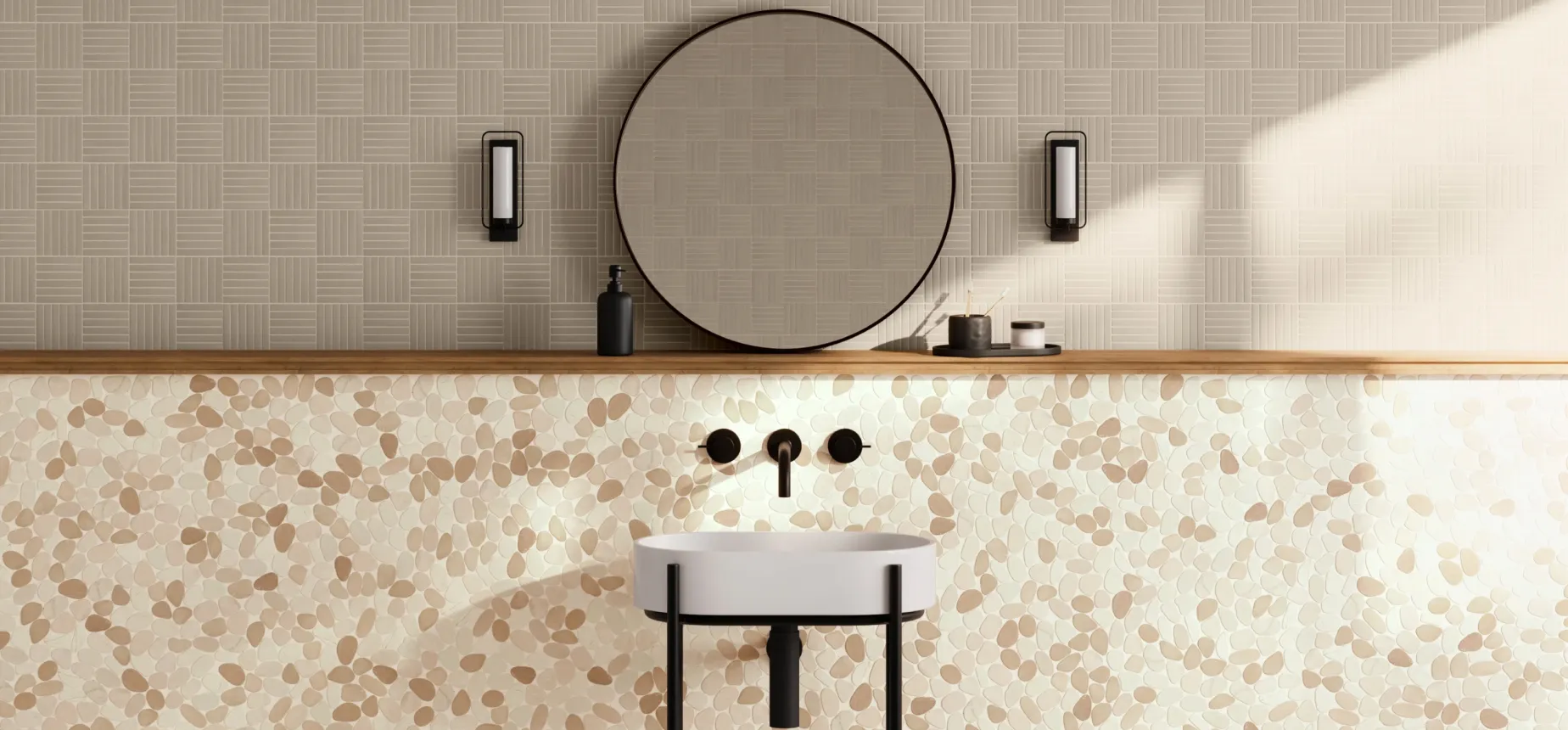
Today, tiles in interior spaces like kitchens and bathrooms remain prevalent. Their resistance to moisture and stains makes them ideal for these spaces. But beyond functionality, the decorative potential of tiles is being increasingly recognized in modern living rooms, bedrooms, and even ceilings. Modern designers, taking historical cues, continue to push boundaries, proving that tiles remain a versatile medium for artistic expression.
From ancient riverbanks to modern homes, tiles have persistently echoed humanity's dual quest: achieving functional excellence while satiating an innate aesthetic appetite.
Keep reading
More on Tile