Kohler
Deck vs Wall-Mounted Bathroom Faucets: Which to Pick
Kohler
The location where you choose to mount your bathroom faucet—either on the deck or the wall—carries both functional and aesthetic implications. Functionally, the mounting location affects how you'll use the sink and how much counter space remains available. Aesthetically, it influences the visual flow of the bathroom and can either serve as a focal point or blend seamlessly into the overall design. Therefore, it's essential to consider both practical needs and design preferences when selecting your faucet's mounting option.
Deck-Mounted Faucets
Kohler
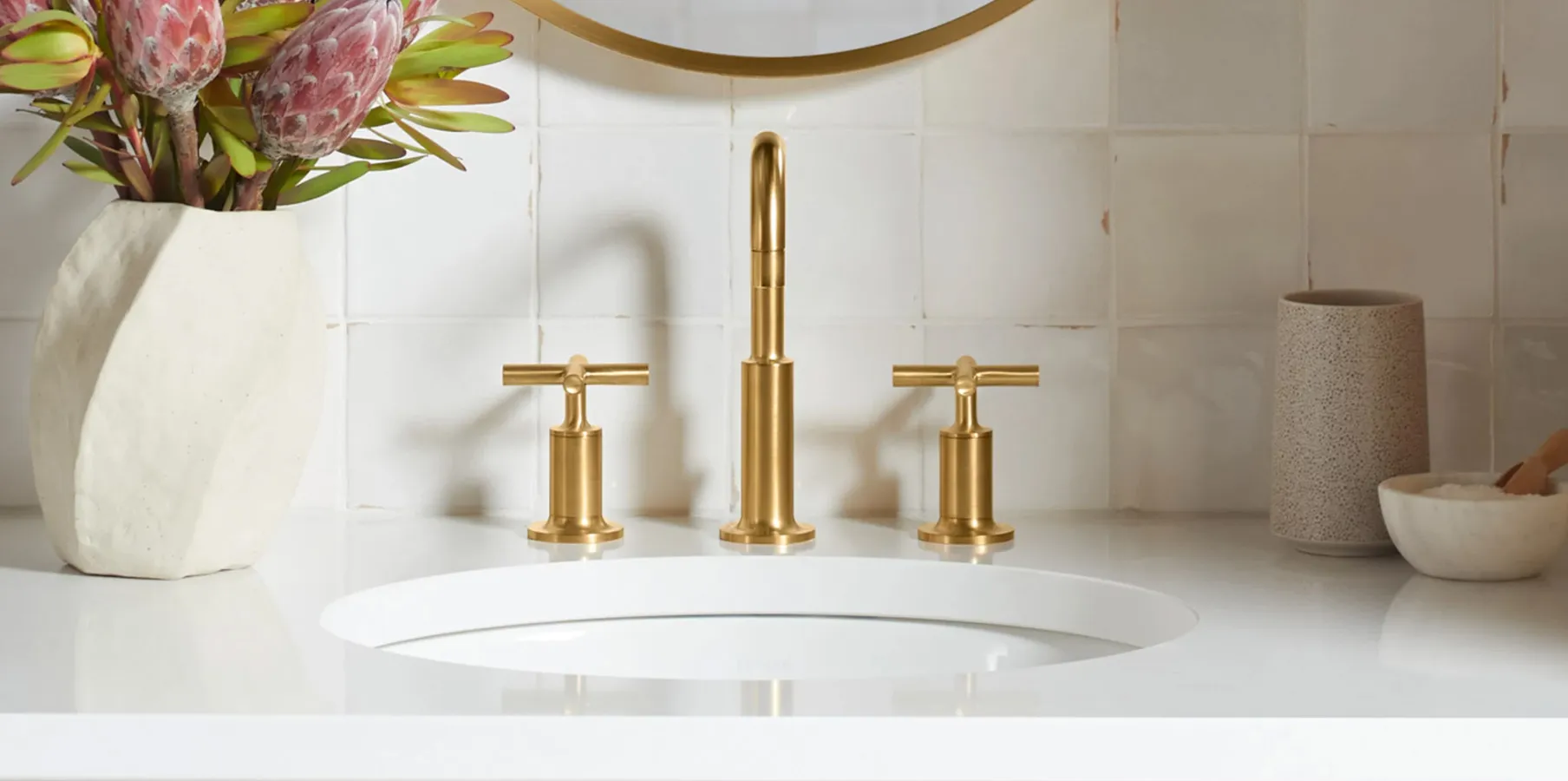
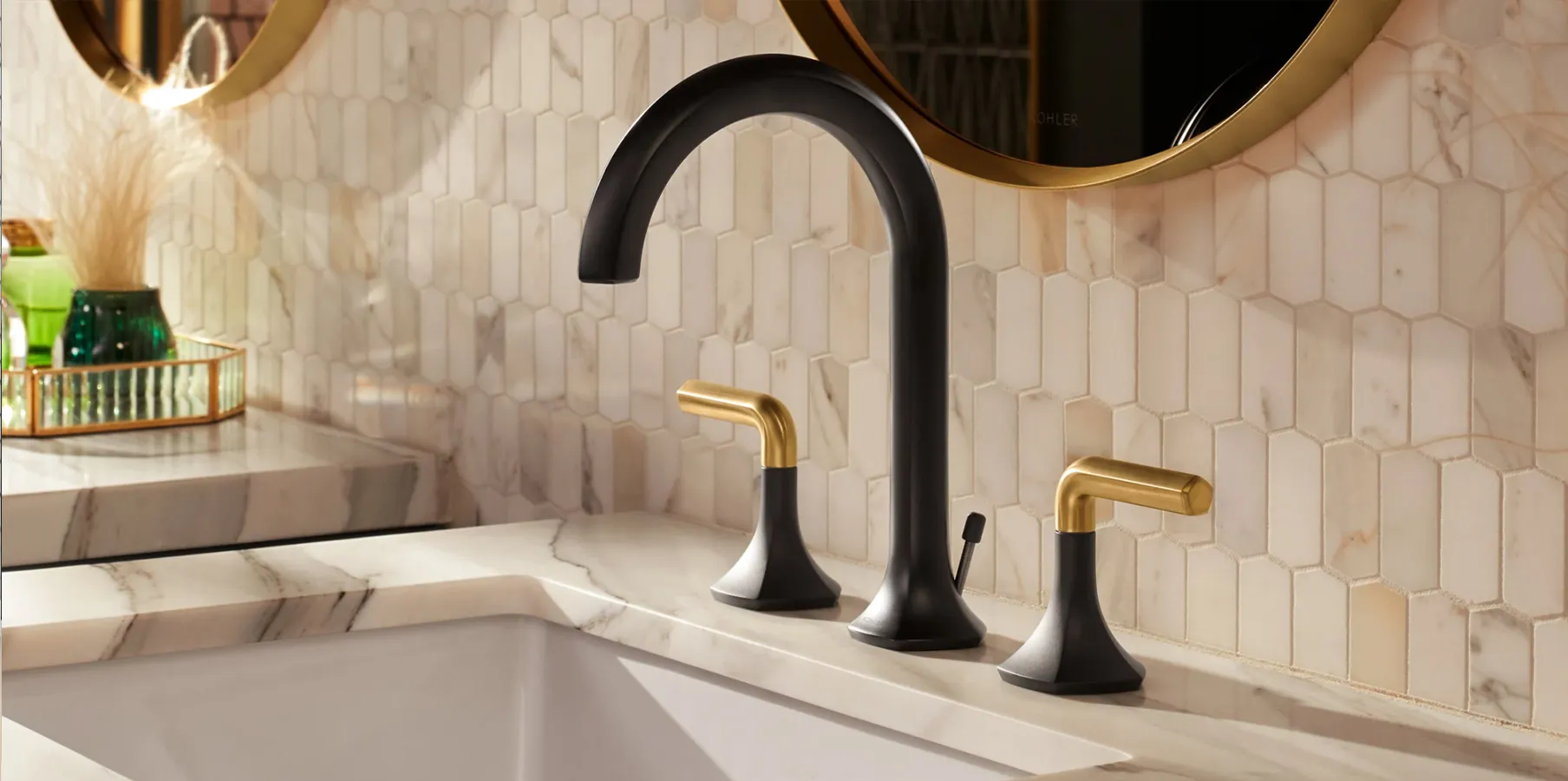
Deck- or counter-mounted faucets are frequently chosen for bathroom setups and require a vanity or countertop for installation. These faucets provide flexibility because they don't necessitate a sink with pre-drilled holes specifically for the faucet; instead, they can be installed on the countertop surface itself, usually behind the sink basin. This creates a cleaner, more streamlined appearance by eliminating the visible plumbing often accompanying other mounting options. A vanity or countertop is essential for this installation, as the faucet hardware is secured through holes drilled in the surface.
With deck-mounted faucets, the primary consideration is the number of holes in the vanity top, which can affect future changes. Starting with a single hole allows you to add more holes later if you switch to a different faucet type. However, if your vanity top already has multiple holes, switching to a single-hole faucet will require a new vanity top or an adapter, which could add to your renovation expenses.
Wall-Mounted Faucets
Kohler
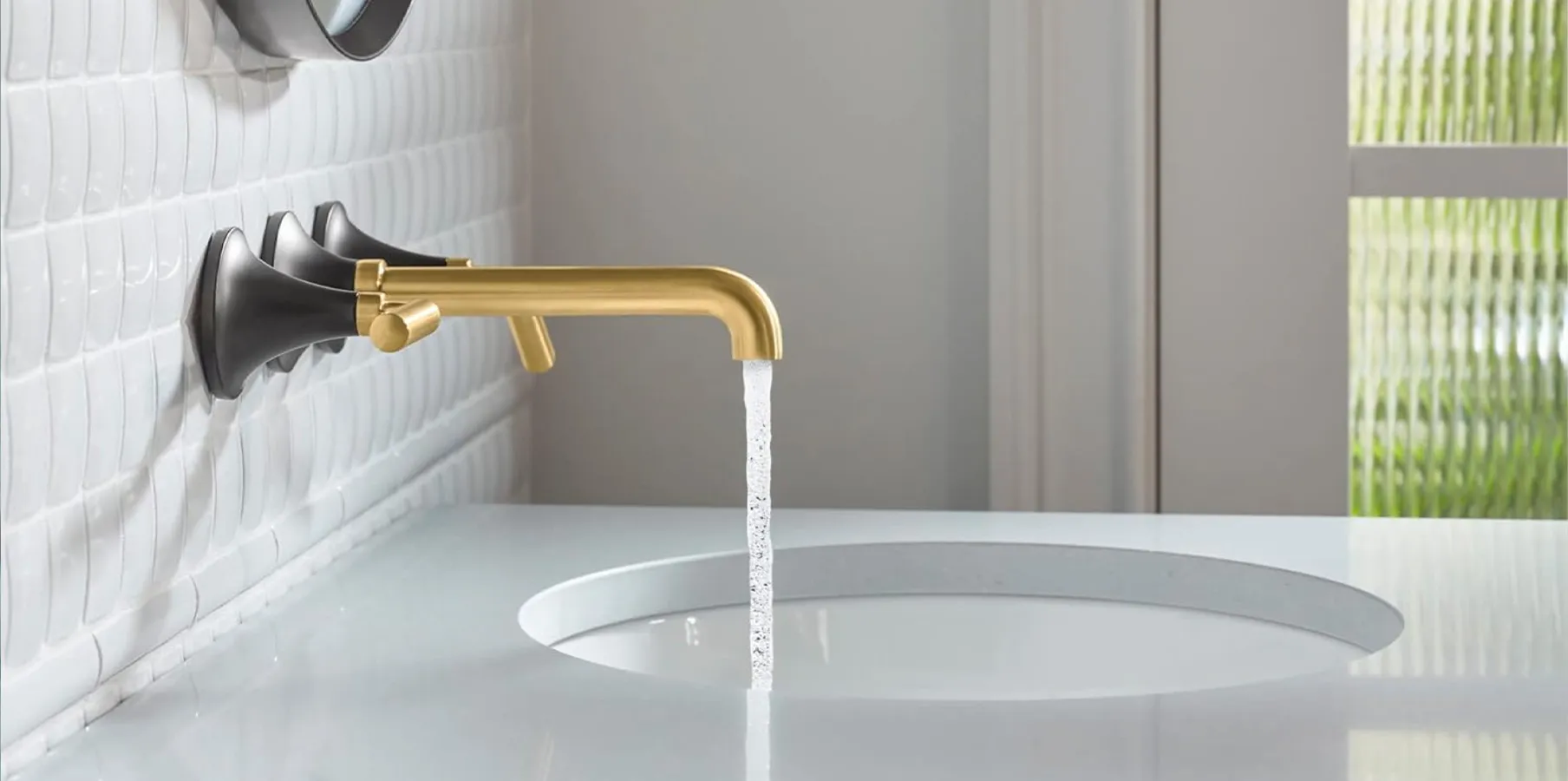
If you want to maximize your counter space, wall-mounted faucets are a functional and aesthetically pleasing choice. These faucets are mounted on the wall above and behind the sink basin, which leaves the entire countertop area around the sink uncluttered. This can be particularly beneficial in smaller bathrooms where counter space is premium. Installing a wall-mounted faucet allows for easier countertop cleaning, with fewer obstructions and corners to work around.
Wall-mounted faucets also offer an opportunity to showcase an exciting backsplash. Because the faucet emerges from the wall, it naturally draws the eye upward, highlighting whatever material you've chosen for the wall behind the sink. This can make your backsplash a standout feature, whether made of unique tiles, brushed metal, or an elegant stone. In this way, a wall-mounted faucet serves a functional role and adds a design element that can elevate your bathroom's overall look and feel.
Installation for wall-mounted faucets involves drilling holes into the wall and may require more extensive plumbing work to connect the faucet to the water supply lines. This could mean opening up the wall for the plumbing, which adds complexity and cost to the project. Once a wall-mounted faucet is installed, replacing it with a different style or moving it to another location would likely require patching the wall and possibly adjusting the plumbing, which could be cumbersome and costly.
Conclusion
Kohler
Selecting between deck-mounted and wall-mounted faucets is about balancing functionality and aesthetics. Deck-mounted options often serve as the focal point of the sink area. At the same time, wall-mounted faucets can free up valuable counter space and highlight unique design elements, such as an attractive backsplash. Both options have their own installation requirements and design implications, making considering your overall bathroom needs and preferences essential.
Keep reading
More on Bathroom Specific