
Hunter
Ceiling Fan Blade Direction by Season: Summer vs Winter
Hunter
Reversing the blade flow on a ceiling fan changes the direction of the blade's spin. This feature is handy as it adapts the fan in different seasons for more effective air circulation throughout the room. Depending on the fan's design, this reverse function can often be controlled by a switch on the fan's motor housing or via a remote control.
In the Summer
Hunter
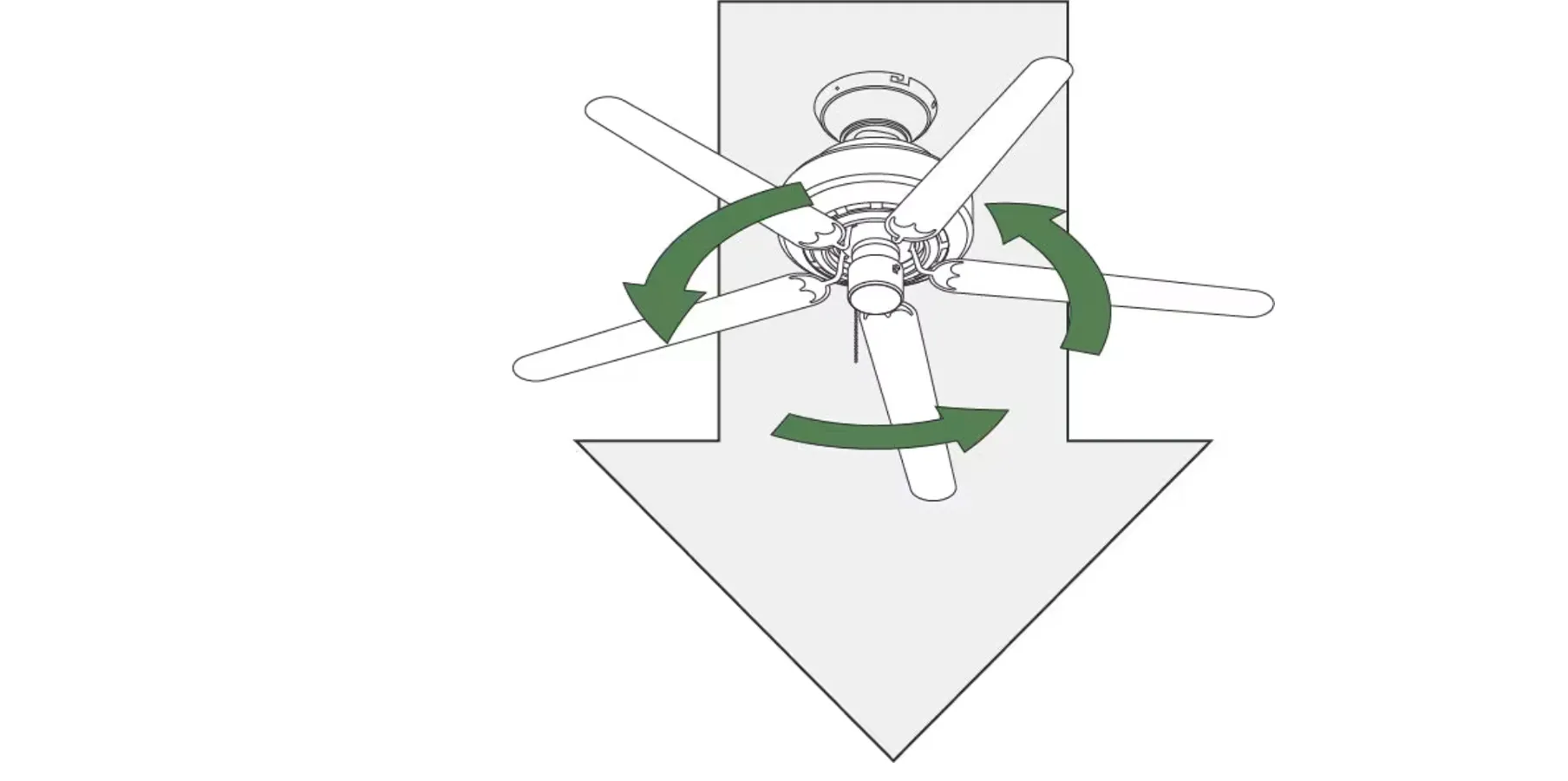
During the summer, a counterclockwise setting on ceiling fan blades is an intelligent way to enhance indoor comfort. As the blades spin in this direction, they move air downwards, directly toward the living space. This airflow creates a breeze, making the room's occupants feel cooler through the wind-chill effect.
It's an efficient method of improving comfort without lowering the room's temperature. This adjustment contributes to a more comfortable living environment and promotes energy savings. By cutting down on air conditioning use, one can significantly reduce electricity consumption during the hottest part of the year, leading to noticeable savings on energy bills. This simple change in the rotation of fan blades embodies a straightforward yet practical approach to sustainable living and energy conservation, with the potential to put money back in your pocket.
In the Winter
Hunter
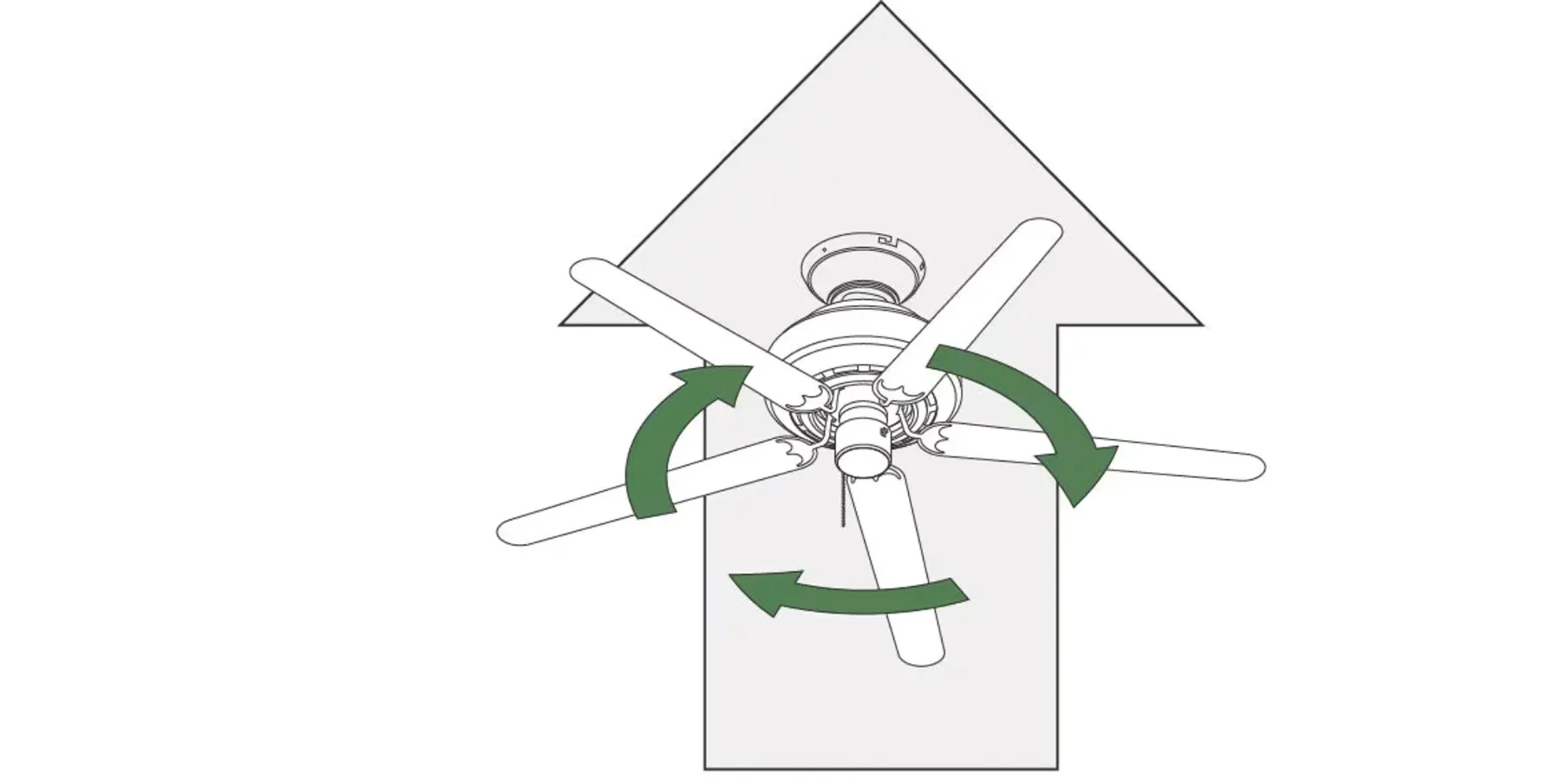
In the chillier winter months, reversing your ceiling fan to rotate clockwise on a low-speed setting can greatly enhance the heat distribution within a room. Warm air naturally accumulates near the ceiling, and a clockwise rotation gently lifts the cooler air from the room’s lower parts without creating a draft. This upward draft moves the cool air to mix with the warm air at the top, causing the warm air to cascade down the walls and back into the living space.
This method promotes uniform heating by recirculating warm air that would otherwise remain trapped at ceiling level, which is particularly beneficial in rooms with high ceilings or uneven heating scenarios. The redistribution of warm air allows for a more balanced temperature from floor to ceiling, enabling the thermostat to maintain a lower setting while achieving the same level of warmth. This creates a more comfortable living environment and contributes to energy efficiency.
Heating systems do not need to work as hard to maintain a set temperature when warm air is evenly dispersed, which can reduce energy consumption. Ultimately, this simple adjustment to the fan's operation can translate into noticeable savings on heating bills during the winter, demonstrating a cost-effective way to maximize home heating without compromising coziness.
Keep reading
More on Ceiling Fan


