Philips Hue
Lighting Controls Guide: Switches, Dimmers & Safety Tips
Philips Hue
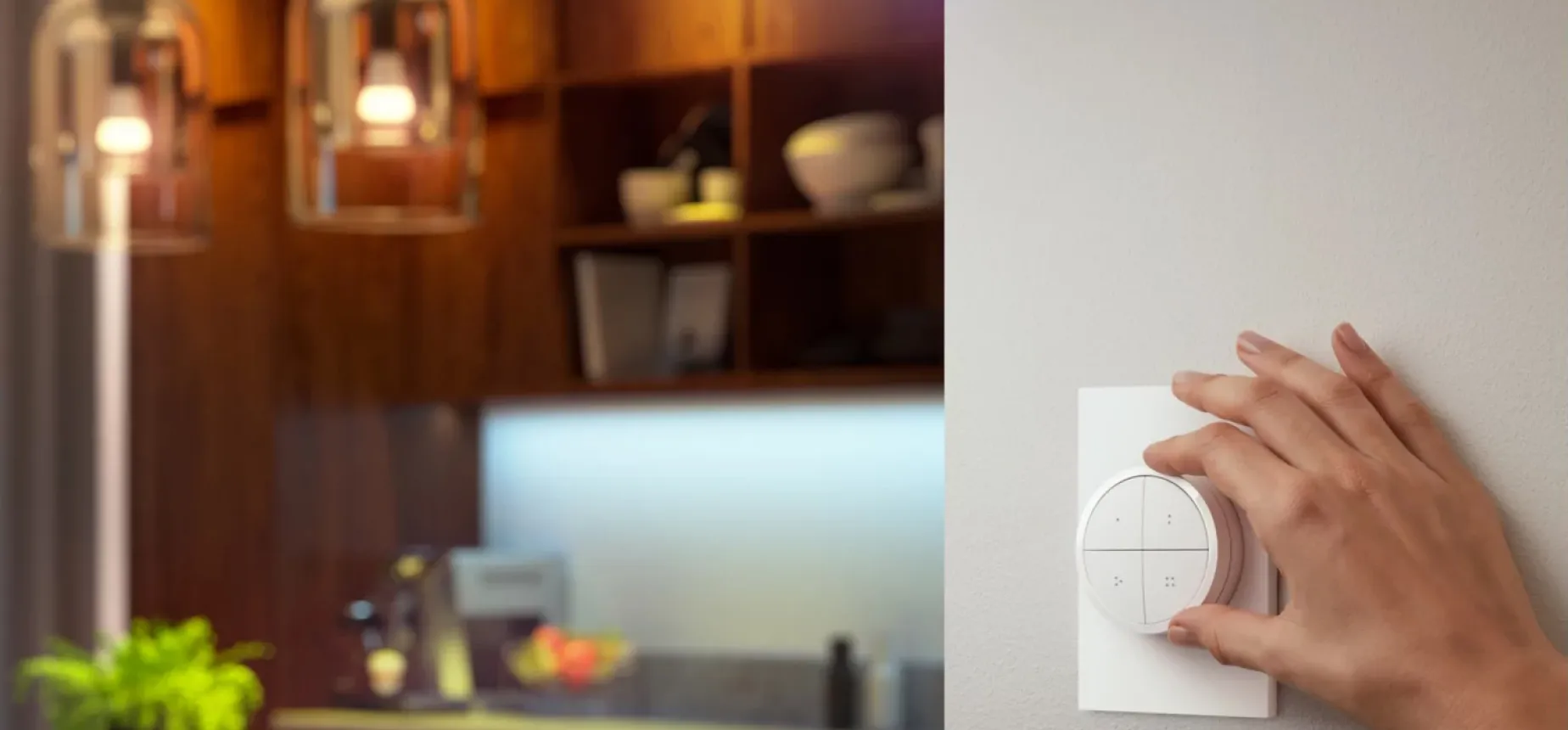
Begin by setting a budget and identifying your style preferences. Determine if you're keen on having high-tech, intelligent switches. If a simple manual switch suffices for your current needs, a consistent, sleek design across your home may be ideal. Remember, upgrading later for enhanced convenience or ambiance is always possible.
While it's tempting to opt for artistic decorative switches or those that offer high-tech lighting experiences, it's essential first to assess what's currently in your home and what's practical for your situation. Out of the varied types available, some switches better complement your home's interior design and architectural style.
Before replacing or upgrading a switch, understand its amperage rating and voltage. This ensures you get a switch that's compatible with your electrical system.

Legrand
Determine the required switch configuration for each space. With single configurations, one switch manages one light. On the other hand, multiple configurations can feature double, triple, or even more switches, enabling you to control multiple lights from a single point.
Beyond just replacing “like with like,” consider which switches are already effective in a given room and which ones might benefit from improvements in functionality and safety.
Consider the durability and lifespan of switches, especially in high-traffic areas. Some materials and finishes might be more resilient and longer-lasting than others.
Think about the switch's usability, especially if you have elderly members or children in your home. Features like large buttons, backlights, or tactile feedback can make switches more user-friendly.

Always adhere to local regulations if you're considering switches for bathrooms or other damp spaces. This includes guidelines on how far switches should be from water sources like showers and basins. By considering these points, you can make an informed decision that marries functionality with aesthetics.
Keep reading
More on Lighting Control