Pratt + Larson
Tile Shapes and Sizes: A Guide to Choosing the Right Fit
Pratt + Larson
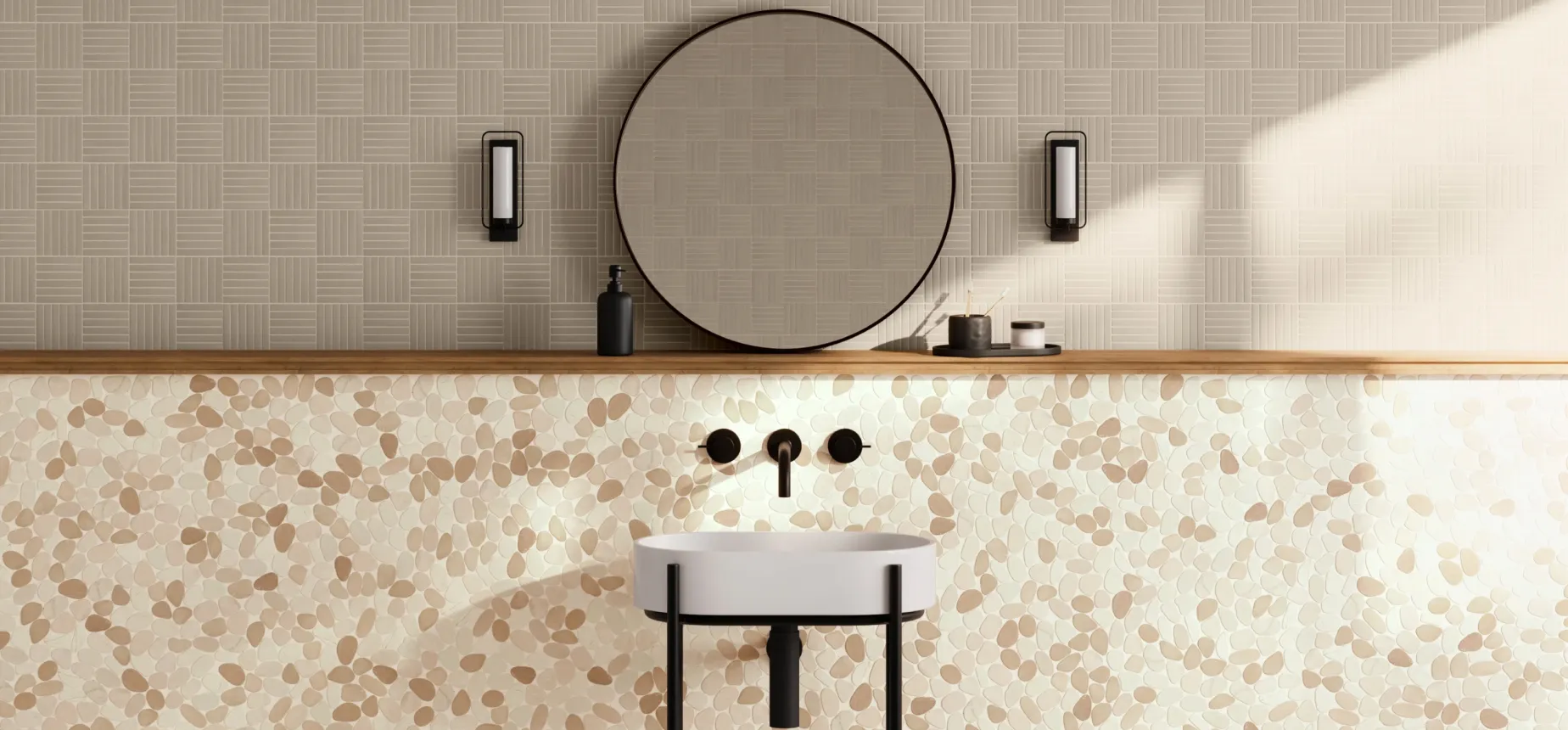
Tile shapes have a great influence on the overall aesthetics and feel of a space. The geometry of the chosen shape creates patterns, lines, and focal points that can enhance or disrupt a room's visual flow. Whether they form structured grids or random layouts, tile shapes amplify the sense of space or add intricacy and detail. Their selection is thus crucial, as it can dictate the room's ambiance, making it feel modern, traditional, open, or cozy, showcasing the transformative power of shape in flooring design.
The size of the tiles and how they are laid out can significantly influence the aesthetics and functionality of a space. Tile sizes range from small mosaic pieces to large format tiles. The size can influence the perception of space; for instance, larger tiles can give a room an expansive feel, while smaller tiles might create a more intricate and detailed appearance.
Mosaic Tiles

Floor & Decor
1 x 1: These are tiny square tiles, often sold on mesh sheets to make installation easier.
2 x 2: Slightly larger than the smallest mosaics, these are still considered on the petite side.
Small Size Tiles

Bedrosians Tile & Stone
4 x 4: A traditional size that's been in use for decades, especially in bathrooms and kitchens.
6 x 6: Another common small tile size.
Medium Size Tiles

Bedrosians Tile & Stone
8 x 8: A slightly smaller medium option.
12 x 12: Perhaps the most standard tile size that's used in a variety of spaces.
6 x 24: Commonly used for wood-look tiles to mimic wooden planks.
Large Size Tiles

Bedrosians Tile & Stone
16 x 16: A larger size that can make smaller rooms feel more expansive.
8 x 18: Another popular large tile size.
Extra Large Tiles

Bedrosians Tile & Stone
12 x 24: A rectangular shape that's popular in contemporary designs.
24 x 24: A favorite for modern homes and commercial spaces.
36 x 36: A significantly large tile often used in spacious areas.
24 x 48: This elongated large tile is ideal for creating a spacious feel and sleek modern aesthetic.
48 x 48: These are some of the largest tiles typically available.
Plank Tiles

Bedrosians Tile & Stone
6 x 36: A standard size for wood-look tiles.
8 x 48: Another common size for plank tiles.
Full Stone Slabs

Nasco Stone + Tile
60 x 120: These full-sized stone slabs are typically used for countertops, large floors in commercial properties, and as feature walls. Their expansive size showcases the stone's natural beauty without interruptions.
65 x 130: Even larger than the previous size, these slabs can cover a more significant area with fewer joints, ideal for luxury spaces and large installations.
70 x 140: Among the most substantial standard slabs available, they're perfect for grand architectural designs where the continuity of stone patterns is desired.
This is not an exhaustive list; some standard sizes and the available dimensions can vary based on the manufacturer and the specific design trends at any given time. Moreover, tile sizes can be custom-made for particular projects, giving designers a unique look for spaces.
Summary
When choosing a tile size, it's essential to consider the scale of the room and the desired outcome. In general, larger tiles can reduce the perceived busyness of a space due to fewer grout lines. On the other hand, smaller tiles, especially mosaics, can add texture and detail to a space. The size of the tiles should work in harmony with the overall design vision and practical aspects of the space they're being used in.
Keep reading
More on Tile