Philips Hue
Light Switch Types Explained: Which One Fits Your Home
Project Guide:
Plan Your Electrical System
Philips Hue
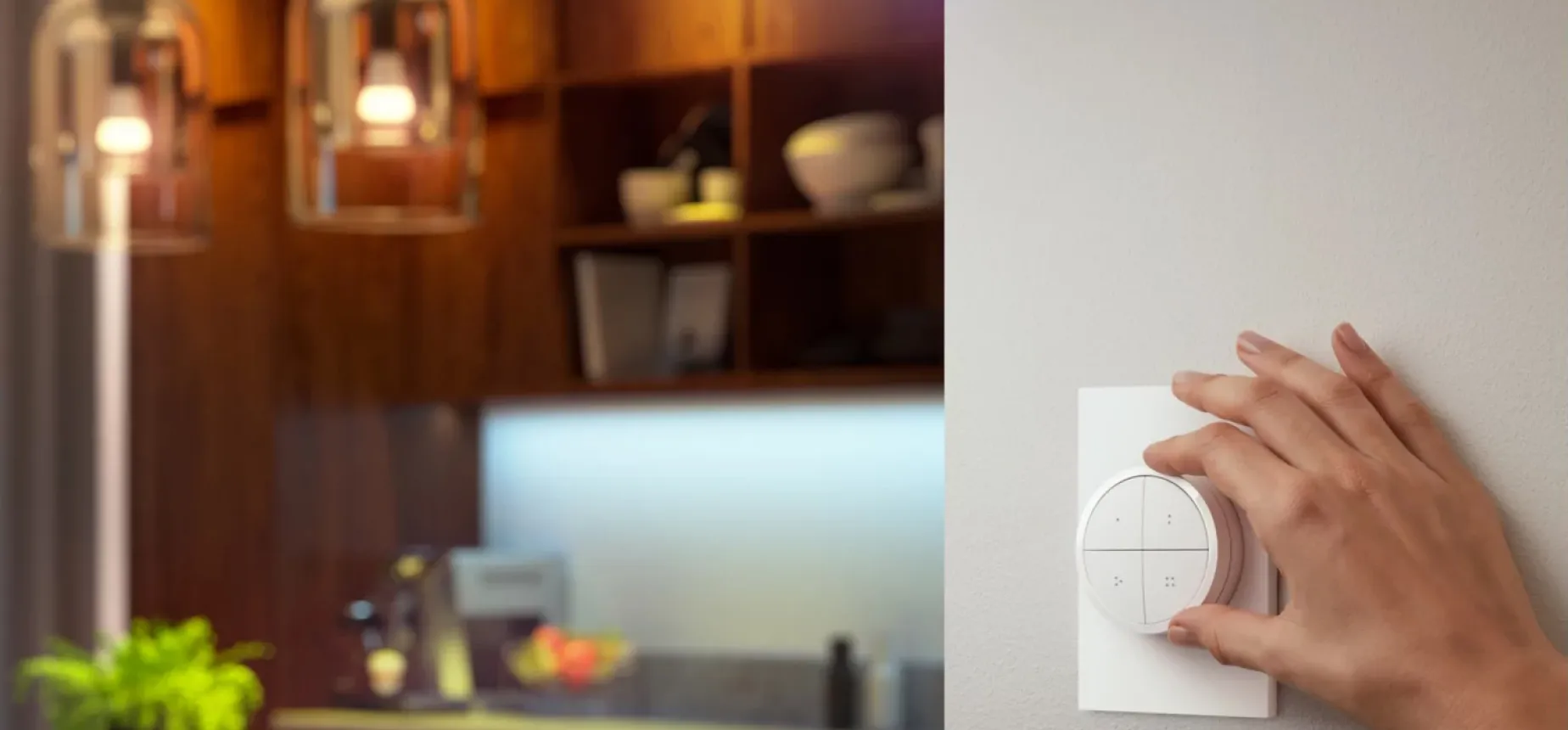
From the vintage homes of our great-grandparents to the ultra-modern residences of today, the humble light switch has been an indispensable component of our daily lives. Switches evolved from basic on-off mechanisms to sophisticated multi-functional systems catering to modern households' requirements. While not so humble anymore, their designs symbolize the changing aesthetics and technological advancements over the decades.
Single Pole
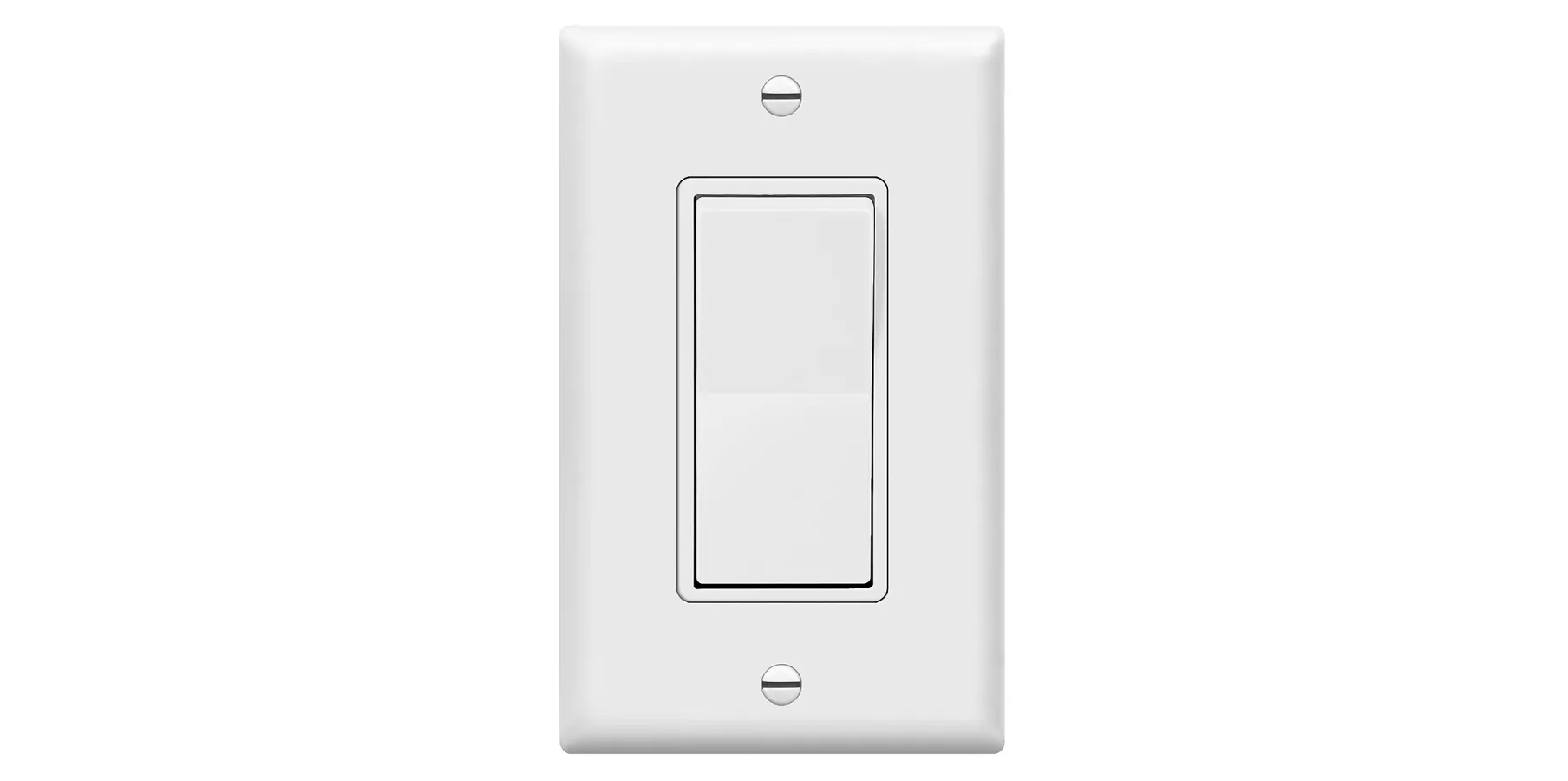
Often termed a one-way light switch, the single-pole switch is marked by its two screw terminals, allowing it to control a circuit only from a single point. Such switches are connected to power on one side, enabling electricity to flow through the attached fixture when turned on. A clear indicator of this type of switch is its "on" and "off" labels. If you have a switch that only controls light from one location, it's likely a single-pole switch. These switches are affordable and straightforward to install.
Double-Pole
Leviton
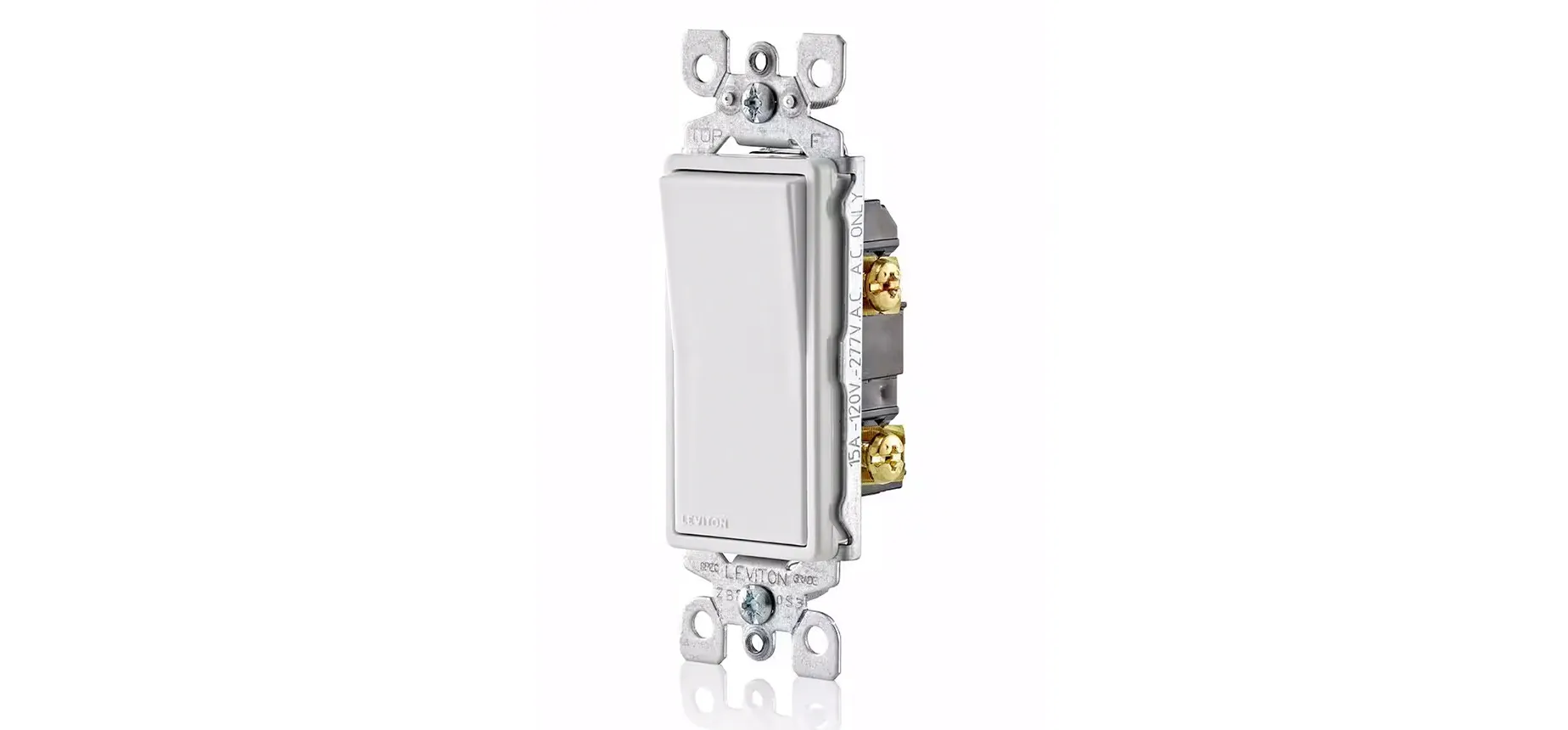
A double-pole switch, typically rated at 30 amps, is designed to control two separate electrical circuits from a single location. This means it can manage two distinct devices, such as two lights, a light and a fan, two outlets, or other combinations of electrical fixtures. Each circuit has its own hot wire, allowing the double-pole switch to turn both circuits on or off simultaneously.
Toggle
LueMelit
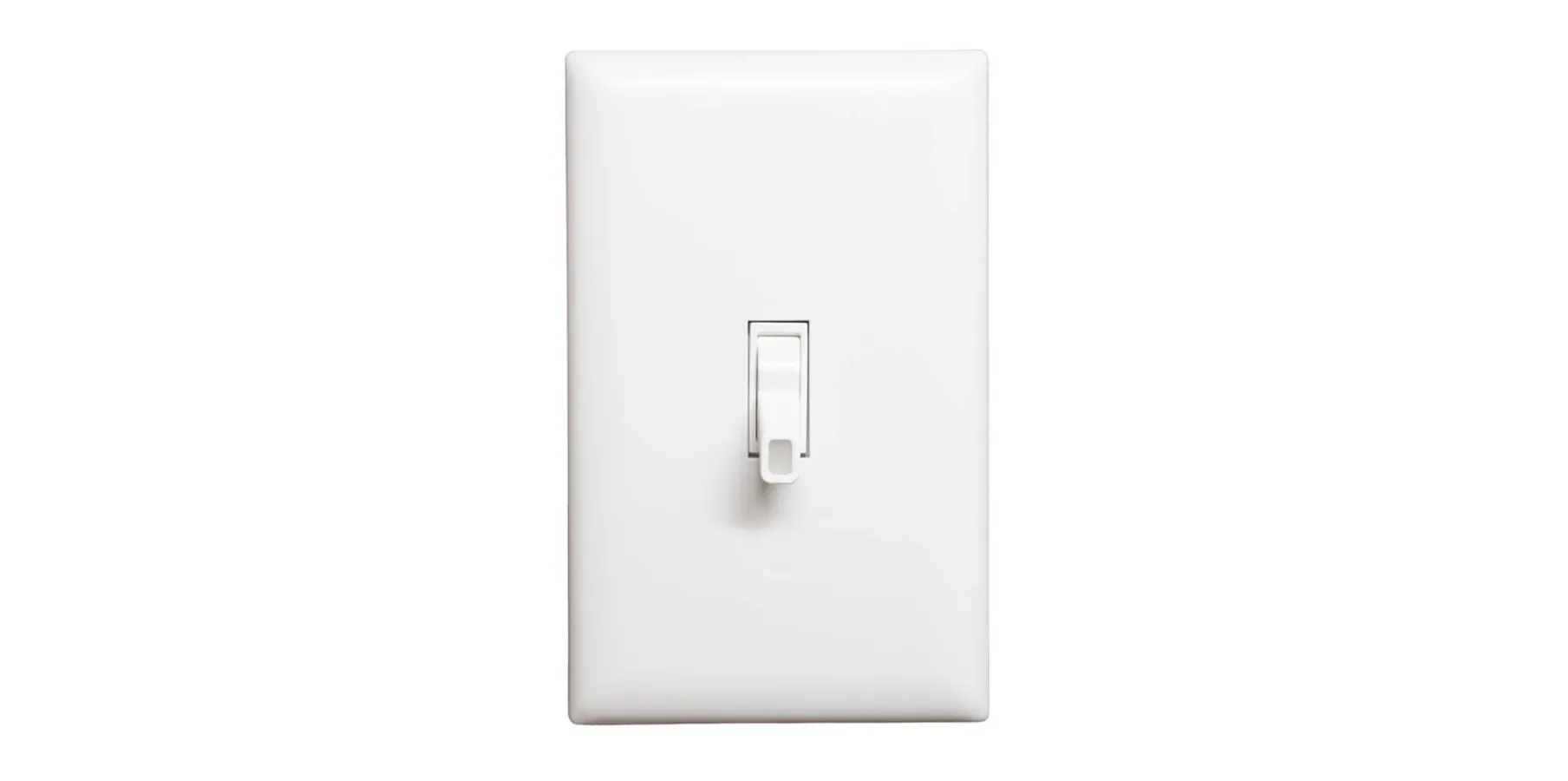
Introduced in the 1930s, toggle light switches are among the most common and recognizable electrical switches used to control home lighting. They consist of a simple lever or "toggle" that can be moved up and down to turn lights on or off. To activate the lights, you flip the toggle switch upward, and to turn them off, you flip it downward.
Toggle light switches are compatible with various lighting fixtures and bulbs, including incandescent, halogen, and some types of LED and CFL bulbs. While traditional in design, toggle light switches remain popular due to their simplicity, durability, and widespread availability.
Rocker
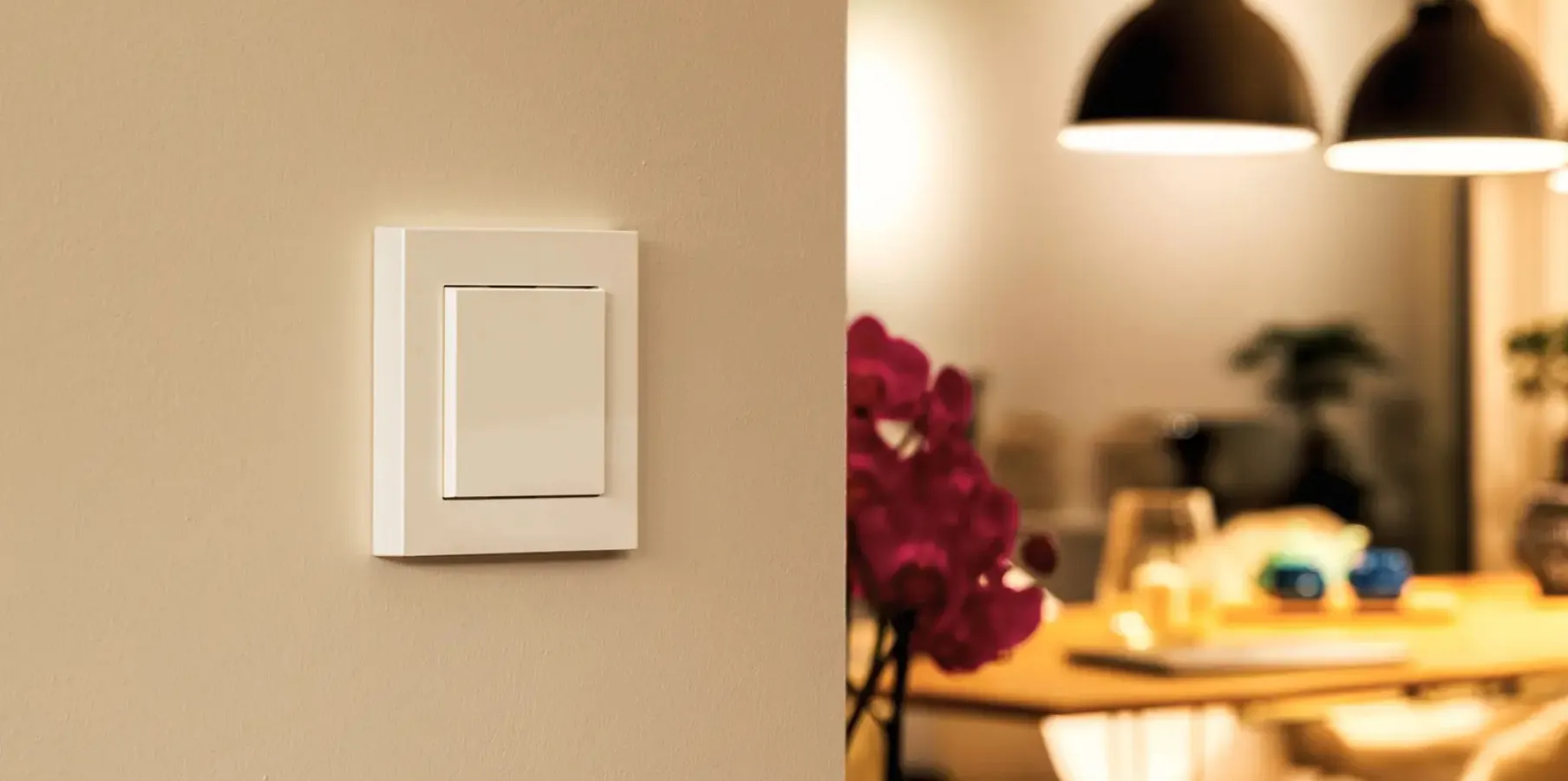
Eve Home
Rocker light switches are a modern alternative to traditional toggle switches, offering a sleek and contemporary design and ease of use. They are designed with a rectangular or oval-shaped plate that houses a central rocker-style switch. Instead of the up-and-down motion of a toggle switch, rocker switches operate by pressing one side of the switch to turn the lights on and the other side to turn them off. This design provides a smooth and intuitive switching experience.
Rocker light switches have gained popularity due to their contemporary appearance and user-friendly operation. They are commonly used in residential and commercial settings where a modern and aesthetically pleasing switch design is desired while offering reliable lighting on/off control.
Push Button
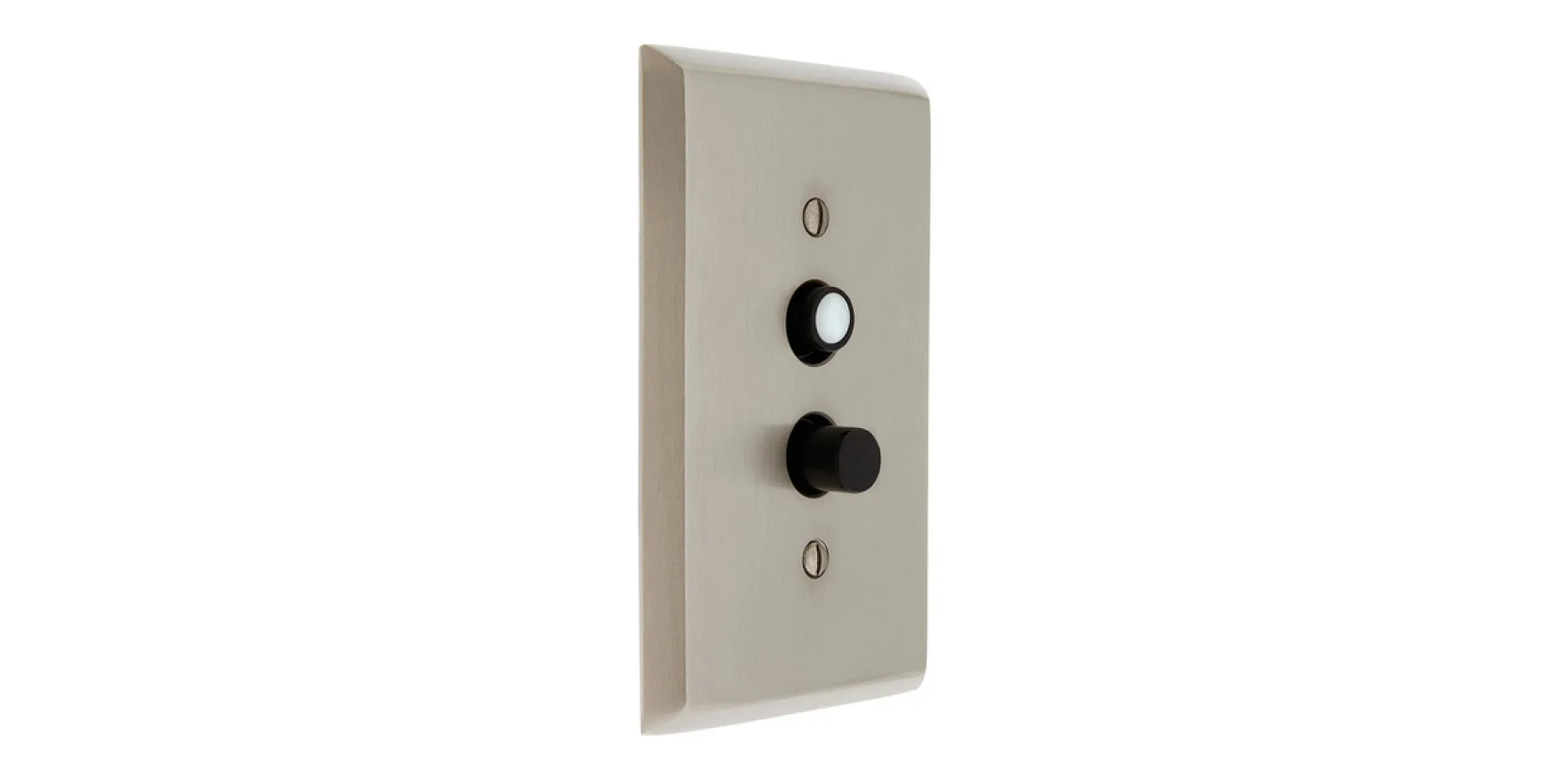
House of Antique Hardware
Push-button switches, harking back to their origins in the 1920s, maintain their distinct and vintage charm. These switches often feature a metallic or plastic construction and are characterized by their unique short-lived latching action. When pressed, a push-button switch triggers the connected lighting fixture, providing a momentary and tactile engagement. While these switches may be considered relics of the past, they continue to be used in various applications, adding a touch of nostalgia and classic aesthetics to spaces where their unique functionality is appreciated.
Touch Light

Livolo
The touch light switch operates on the principle of electrical storage capacity, offering a modern and convenient alternative to traditional switches. This innovative switch detects variations in the electric field when touched, which triggers the light to turn on or off. Unlike traditional switches requiring a push or flip, the touch light switch offers a more seamless and user-friendly experience. With a gentle touch, users can effortlessly activate or deactivate the light, providing a sophisticated and convenient lighting control solution for homes and spaces where modern technology and aesthetics are valued.
Three-Way
A three-way switch is a specialized electrical switch that allows users to control a single lighting fixture from two switch locations, providing enhanced convenience and flexibility. This feature is particularly valuable in expansive areas such as hallways, staircases, or large rooms with multiple entry points.
Unlike standard switches, three-way switches typically lack "on" and "off" labels, as they don't have a fixed on or off position. Instead, they use a toggle or rocker mechanism to change the state of the connected light fixture, allowing it to be turned on or off from either switch location. This absence of labels reflects their unique functionality, which empowers users to conveniently control the same light fixture from multiple points without being constrained by a fixed on or off position.
Four-Way
A four-way switch is a specialized electrical switch for spaces with multiple activity points or large rooms, such as spacious living rooms or combined kitchen-dining areas. It plays an intermediary role between two three-way switches, creating a sophisticated lighting control system that enables users to control a single light or a set of lights from three or more switch locations. For instance, in a long hallway scenario, you might have a switch at each end and one in the middle; the middle switch would be the four-way switch.
Like three-way switches, these switches typically lack "on" and "off" labels, as they function differently. Instead, they utilize a toggle or rocker mechanism to allow users to change the state of the lights from multiple locations, offering a flexible and convenient lighting control solution for larger spaces with complex lighting needs.
Conclusion

Switches are essential to our daily lives, facilitating the control of lighting and electrical devices in homes, offices, and other spaces. From the classic toggle and rocker switches to the more advanced dimmer switches and smart switches, each type offers unique features and benefits to cater to diverse preferences and requirements. As technology advances, switches evolve to provide greater convenience, energy efficiency, and customization, making them a fundamental aspect of modern living.
Up Next:

Dimmers Guide: 9 Types and How to Choose the Right One
Project Guide:
Plan Your Electrical System